Kurukshetra: The Great War of Mahabharata
The Greatest Epic of All Time
A saga of duty, war, and righteousness

Birth of Kuru Dynasty
The glorious Kuru dynasty, originating from the lunar lineage, finds its defining moment with King Shantanu. A ruler of immense virtue and truth, his reign laid the unshakeable foundation for the kingdom of Hastinapur, setting the stage for a saga of duty, destiny, and desire that would echo through eternity.
Epic Fact
Shantanu was an ancestor of both the Pandavas and the Kauravas.

Ganga and Bhishma
Entranced by her beauty, Shantanu marries Goddess Ganga, who later gives birth to Devavrata. This child, born of a mortal king and a celestial river, was destined for greatness. He would grow up to be a warrior of unmatched prowess and wisdom, later known to the world as the grandsire Bhishma.
Epic Fact
Bhishma was the eighth son of Ganga and Shantanu.
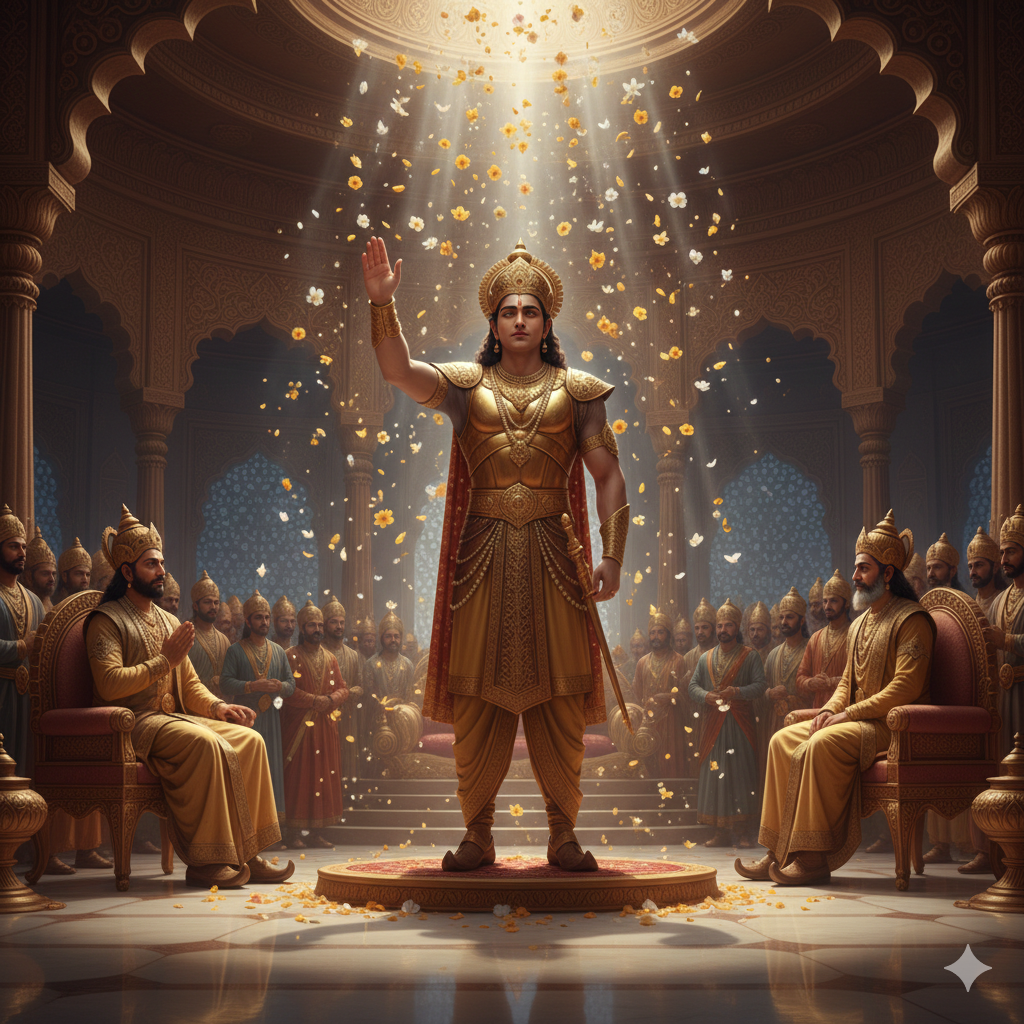
Bhishma’s Terrible Vow
To fulfill his father's desire to marry Satyavati, Devavrata took a terrifying vow that shook the heavens. He swore lifelong celibacy and renounced his claim to the throne, ensuring no future dispute would arise. This supreme sacrifice earned him the name 'Bhishma'—the one who has taken a terrible oath.
Epic Fact
Because of this vow, Devavrata came to be known as 'Bhishma' (The Terrible).

Birth of Pandavas
In the serene forests of Shatashringa, Queen Kunti, using a divine mantra, invoked celestial deities. From Lord Yama came Yudhishthira (Righteousness), from Vayu came Bhima (Strength), and from Indra came Arjuna (Valor). Madri, sharing the mantra, bore Nakula and Sahadeva from the Ashwini Kumaras. Thus, the five Pandavas were born of divine grace.
Epic Fact
Each Pandava was son of a different god: Yama, Vayu, Indra, and Ashwini Kumaras.

Birth of Kauravas
After a prolonged pregnancy of two years and through the intervention of Sage Vyasa, Queen Gandhari gave birth to a hundred sons and one daughter. Known as the Kauravas, they were led by the eldest, Duryodhana. From birth, omens of destruction were seen, signaling the tumultuous future they would bring to the dynasty.
Epic Fact
Gandhari also had one daughter named Dushala.

Childhood Rivalry
Growing up in the royal palace, the Pandavas and Kauravas were constantly at odds. The Pandavas' natural skill and popularity sparked a deep, burning jealousy in Duryodhana's heart. This childhood envy, fueled by his uncle Shakuni, would eventually fester into a hatred strong enough to destroy the entire clan.
Epic Fact
Bhima was often the target of Duryodhana's pranks and plots.
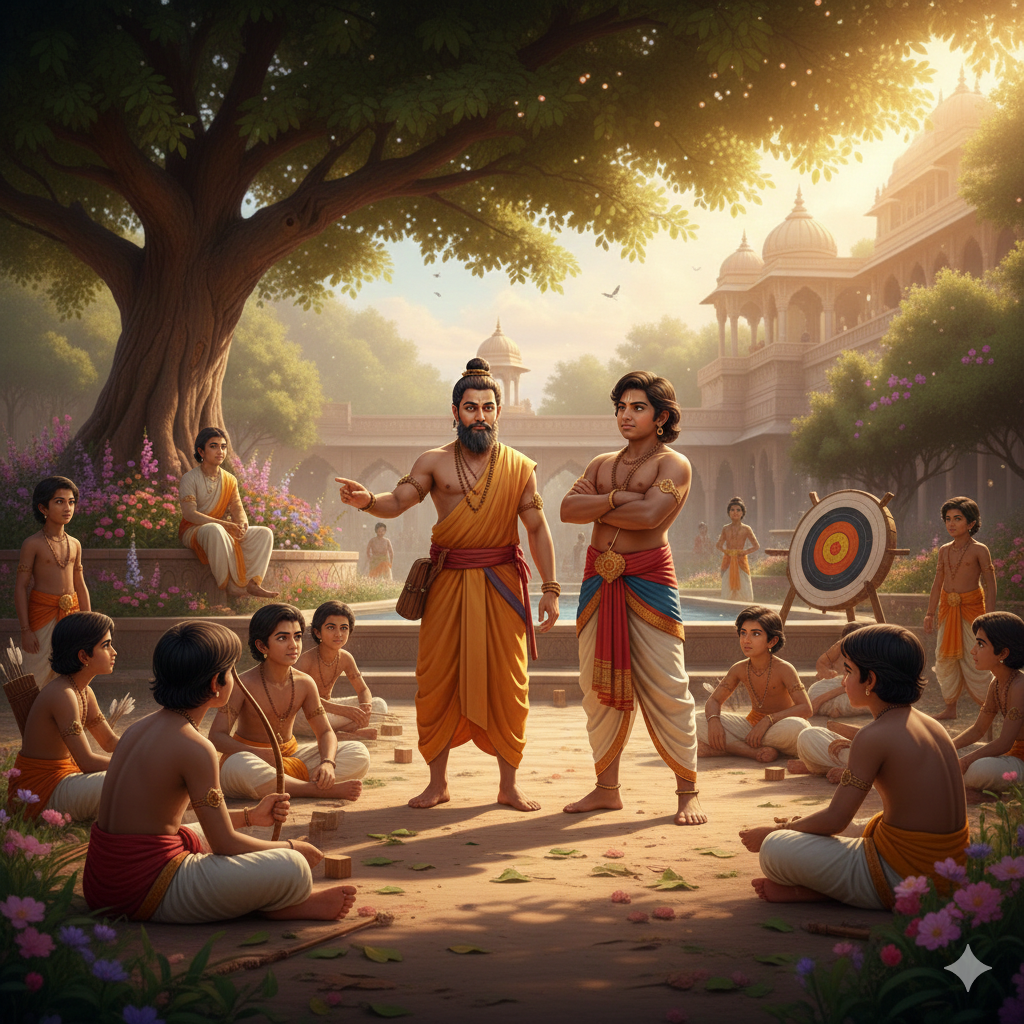
Training under Dronacharya
To shape the young princes into warriors, Bhishma appointed Guru Dronacharya, the master of military arts. Under his stern yet brilliant guidance, the princes mastered the Vedas, statecraft, and the art of divine weaponry. The Gurukul resonated with the twang of bows and the clash of swords as legends were forged.
Epic Fact
Drona was a master of advanced military arts and divine weapons.

Arjuna’s Skill
Among all disciples, Arjuna stood out like a shining star. His focus was unbreakable; when asked what he saw while aiming at a bird, he famously replied, 'I see only the eye of the bird.' Impressed by his unwavering dedication, Drona promised to make him the greatest archer the world had ever seen.
Epic Fact
Arjuna could shoot arrows in the dark just by hearing the sound!

Ekalavya’s Sacrifice
Ekalavya, a tribal prince denied training by Drona, practiced self-taught archery before a clay statue of the Guru. His skill surpassed even Arjuna's. When Drona discovered this, he asked for Ekalavya's right thumb as Guru Dakshina. Without hesitation, Ekalavya cut it off, immortalizing his devotion in history.
Epic Fact
Ekalavya learned archery by practicing in front of a clay statue of Drona.
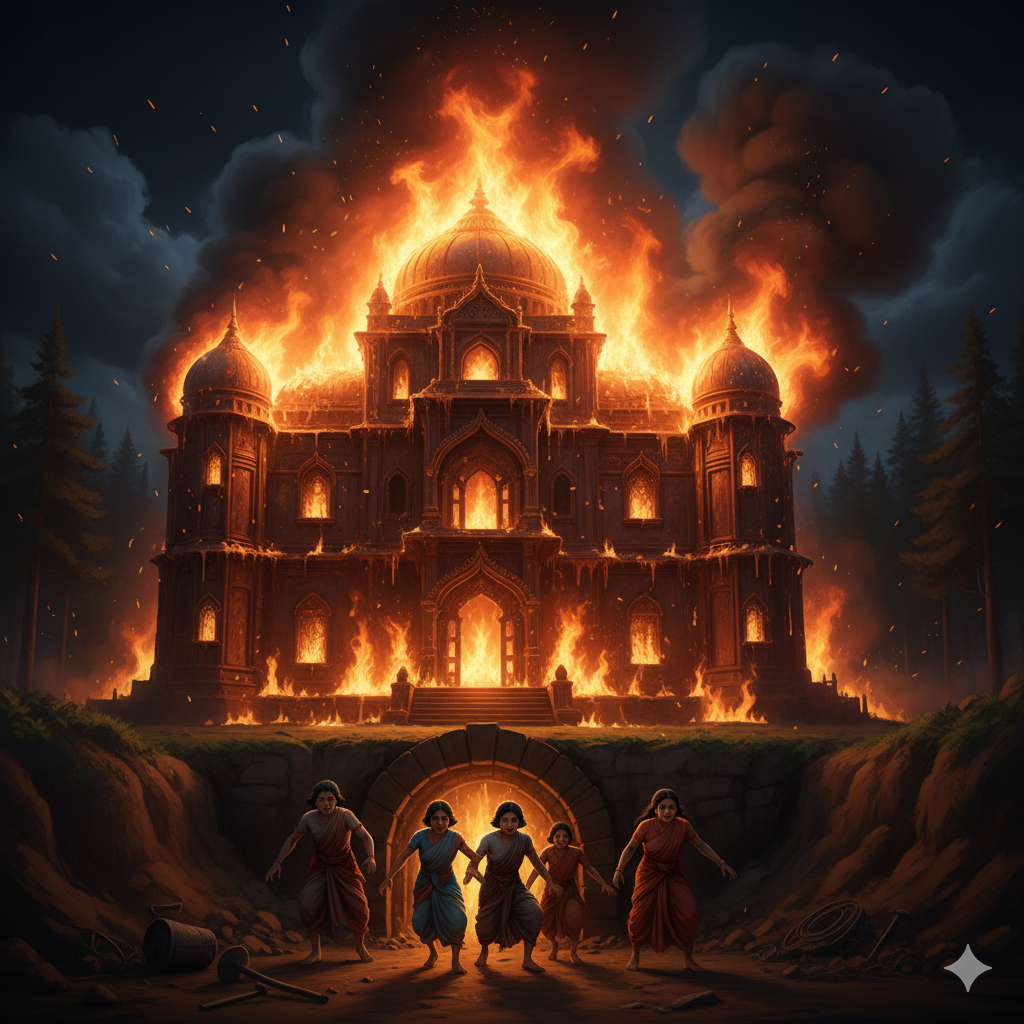
Lakshagriha Plot
Consumed by hatred, Duryodhana conspired to eliminate the Pandavas by housing them in a palace made of highly flammable lac (wax) in Varanavat. He planned to burn them alive in their sleep. However, guided by Vidura's cryptic warning, the Pandavas dug a tunnel and escaped the inferno just as the palace turned to ash.
Epic Fact
Vidura warned Yudhisthira about the plot using a secret language.

Marriage of Draupadi
In the grand Swayamvar of Draupadi, princes failed to string the mighty bow. Disguised as a Brahmin, Arjuna stepped forward, looked only at the reflection in the water, and pierced the fish's eye above with a single arrow. Destiny, however, had a unique path, as Draupadi became the common wife of all five Pandavas due to Kunti's words.
Epic Fact
Draupadi was born from a sacrificial fire.

Indraprastha Kingdom
Given a barren land called Khandavprastha, the Pandavas, with Krishna's guidance and the architect Mayasura's art, transformed it into Indraprastha—a city that rivaled heaven. Its optical illusions, crystal floors, and grandeur were so mesmerizing that they became the envy of the entire world, especially Duryodhana.
Epic Fact
The palace was so magical that floors looked like water and water looked like floors.
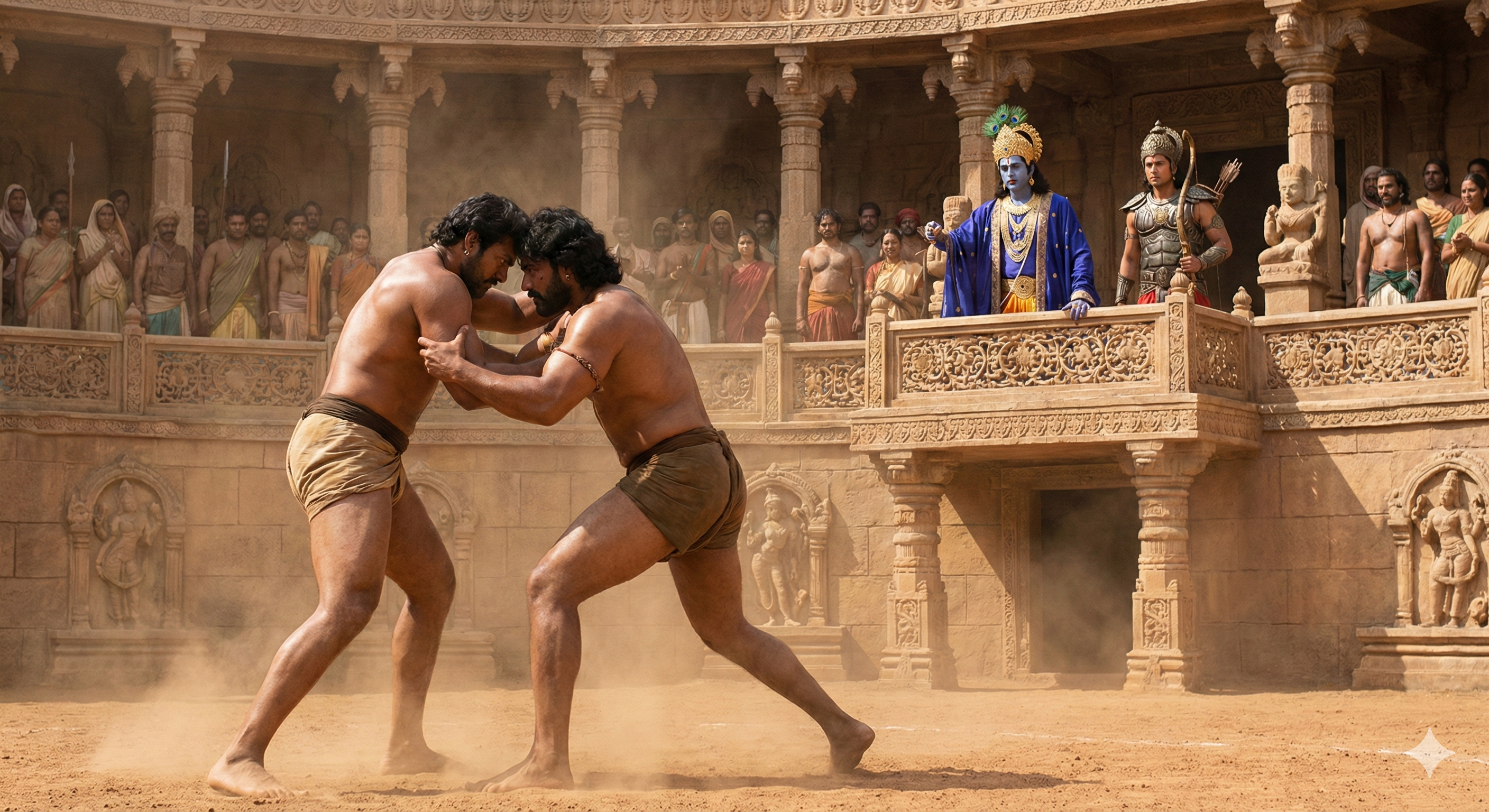
Jarasandha's End
To perform the Rajasuya Yagna, Krishna, Bhima, and Arjuna went to Magadha. Jarasandha could only be killed by being torn apart. After 14 days of wrestling, Bhima tore him into two and threw the halves in opposite directions, ending his tyranny.
Epic Fact
Jarasandha was named so because he was joined together by a demoness named Jara.

Game of Dice
Invited to a friendly game of dice, Yudhishthira was tricked by the cunning Shakuni, who played with loaded dice. Bound by the code of honor, Yudhishthira gambled away his wealth, his kingdom, his brothers, and finally, even himself and Draupadi, leading to the darkest hour of the Kuru clan.
Epic Fact
Shakuni had magic dice that always rolled the numbers he wanted.

Draupadi’s Humiliation
In a horrific act of malice, Dushasana dragged Queen Draupadi into the court and attempted to disrobe her. Helpless, she prayed to Lord Krishna. In a divine miracle, her saree became endless. Dushasana fell exhausted, but the cloth never ended, preserving the dignity of the daughter of fire in the face of absolute evil.
Epic Fact
Krishna made Draupadi's saree endless to save her from shame.

Exile of Pandavas
Humiliated and cheated, the Pandavas accepted the condition of 12 years of forest exile and 1 year of living incognito (Agyatvas). Stripped of their royal robes, they walked into the wild, enduring hardships that would only steel their resolve and prepare them for the inevitable war for justice.
Epic Fact
The 13th year had to be spent in disguise (Agyatvas) without being recognized.

Arjuna’s Penance
Knowing the war would require immense power, Arjuna undertook severe penance in the Himalayas to please Lord Shiva. After a test of valor involving a duel with Shiva disguised as a hunter (Kirata), Arjuna earned the devastating Pashupatastra, adding a weapon of mass destruction to his arsenal.
Epic Fact
He received the Pashupatastra from Lord Shiva.

Bhima and Hanuman
While searching for the mythical Saugandhika flower for Draupadi, Bhima encountered an old monkey blocking his path. Unable to lift even its tail, Bhima realized this was no ordinary creature. It was Hanuman, his spiritual brother. Hanuman blessed Bhima, promising to sit on Arjuna's flag during the war, striking terror into enemies.
Epic Fact
Bhima and Hanuman were spiritual brothers, as both were sons of Vayu (Wind God).

Krishna’s Peace Mission
As a final attempt to avert bloodshed, Krishna went to Hastinapur asking for just five villages for the Pandavas. Duryodhana arrogantly refused, saying he wouldn't give even a needle-point of land. When he tried to capture Krishna, the Lord revealed his Viswaroop (Cosmic Form), showing that he alone is the creator and destroyer.
Epic Fact
Duryodhana tried to arrest Krishna, but Krishna revealed his Cosmic Form (Vishwaroop).

Kurukshetra: The Great War of Mahabharata
The colossal war begins on the sacred soil of Kurukshetra. It is not just a battle for a kingdom, but a war of Dharma. Millions of warriors, elephants, and chariots clash as the blowing of conch shells signals the start of the 18-day carnage that will reshape history.
Epic Fact
The war lasted for 18 days and involved millions of warriors.

Bhagavad Gita
Just before the war, Arjuna was overcome with grief at the thought of killing his own kinsmen. In that frozen moment of time, Lord Krishna delivered the Bhagavad Gita right on the battlefield. He revealed the eternal truth of the soul, the importance of Dharma (duty), and the path of Karma Yoga, inspiring Arjuna to lift his bow.
Epic Fact
The Gita is a 700-verse scripture that is part of the Mahabharata.

Bhishma on Bed of Arrows
Bhishma, the invincible commander of the Kauravas, could not be defeated by force. On the 10th day, facing Shikhandi whom he would not fight, Bhishma lowered his bow. Arjuna pierced him with innumerable arrows. The Grandsire fell, not touching the ground but resting on a bed of arrows, waiting for the auspicious time to leave his mortal coil.
Epic Fact
Bhishma had the boon of 'Ichha Mrityu' (death at will), so he chose when to leave his body.

Abhimanyu’s Bravery
On the 13th day, the 16-year-old Abhimanyu penetrated the impenetrable Chakravyuha formation. Trapped without support, he fought like a lion against veteran warriors like Drona, Karna, and Ashwatthama. Though brutally killed in an unfair gang attack, his valor became the most tragic yet heroic chapter of the war.
Epic Fact
Abhimanyu learned how to enter the Chakravyuha while in his mother's womb.

Death of Jayadratha
Enraged by Abhimanyu's death, Arjuna vowed to kill Jayadratha by sunset. Krishna temporarily masked the sun with his Chakra, creating an illusion of dusk. Jayadratha emerged to mock Arjuna, and in that split second, the sun reappeared, and Arjuna's arrow severed his head.
Epic Fact
Jayadratha's father had a boon that whoever caused his son's head to fall on the ground would explode.
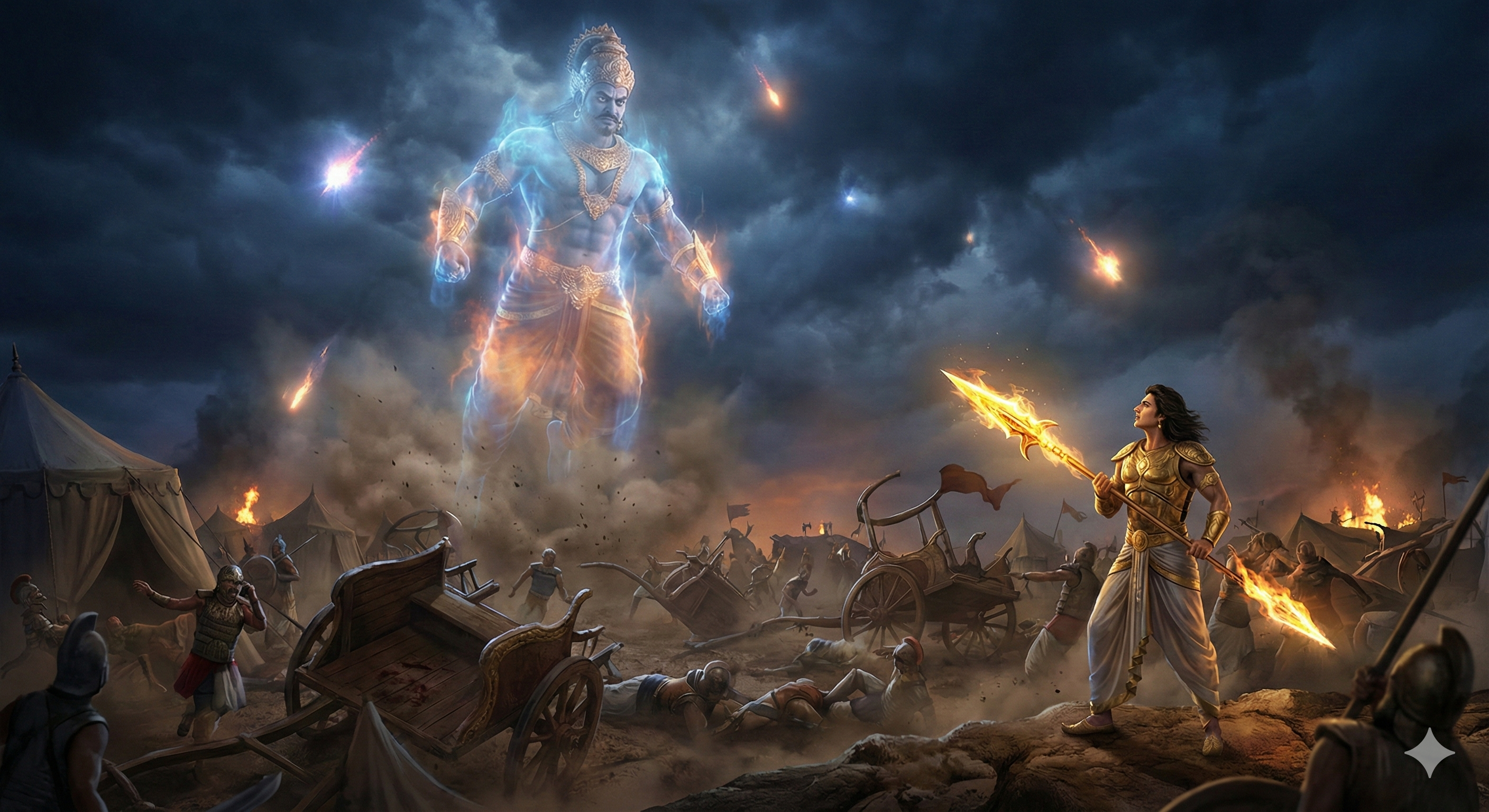
Ghatotkacha's Sacrifice
On the 14th night, Ghatotkacha wreaked havoc on the Kaurava army with his illusions. Unable to stop him, Karna was forced to use his divine Vasavi Shakti weapon, which he had saved for Arjuna. Ghatotkacha died smiling, knowing his sacrifice had saved his uncle Arjuna's life.
Epic Fact
Ghatotkacha increased his size while falling to crush the Kaurava army.

Karna’s Loyalty
Just before the war, Kunti revealed to Karna that he was her eldest son. Krishna also asked him to join the Pandavas. However, Karna refused to abandon his friend Duryodhana, who had given him respect when the world mocked him. He chose certain death over betrayal, defining the true meaning of friendship and loyalty.
Epic Fact
Karna was known as 'Danveer' for his immense generosity.

Drona’s Fall
Guru Dronacharya was decimating the Pandava army. To stop him, Krishna devised a plan. Yudhishthira, known for his truthfulness, proclaimed 'Ashwatthama is dead' (adding softly 'the elephant'). Hearing this, a heartbroken Drona dropped his weapons in meditation, allowing Dhrishtadyumna to behead him, fulfilling an old prophecy.
Epic Fact
Yudhishthira said 'Ashwatthama is dead' but whispered 'the elephant', confusing Drona.
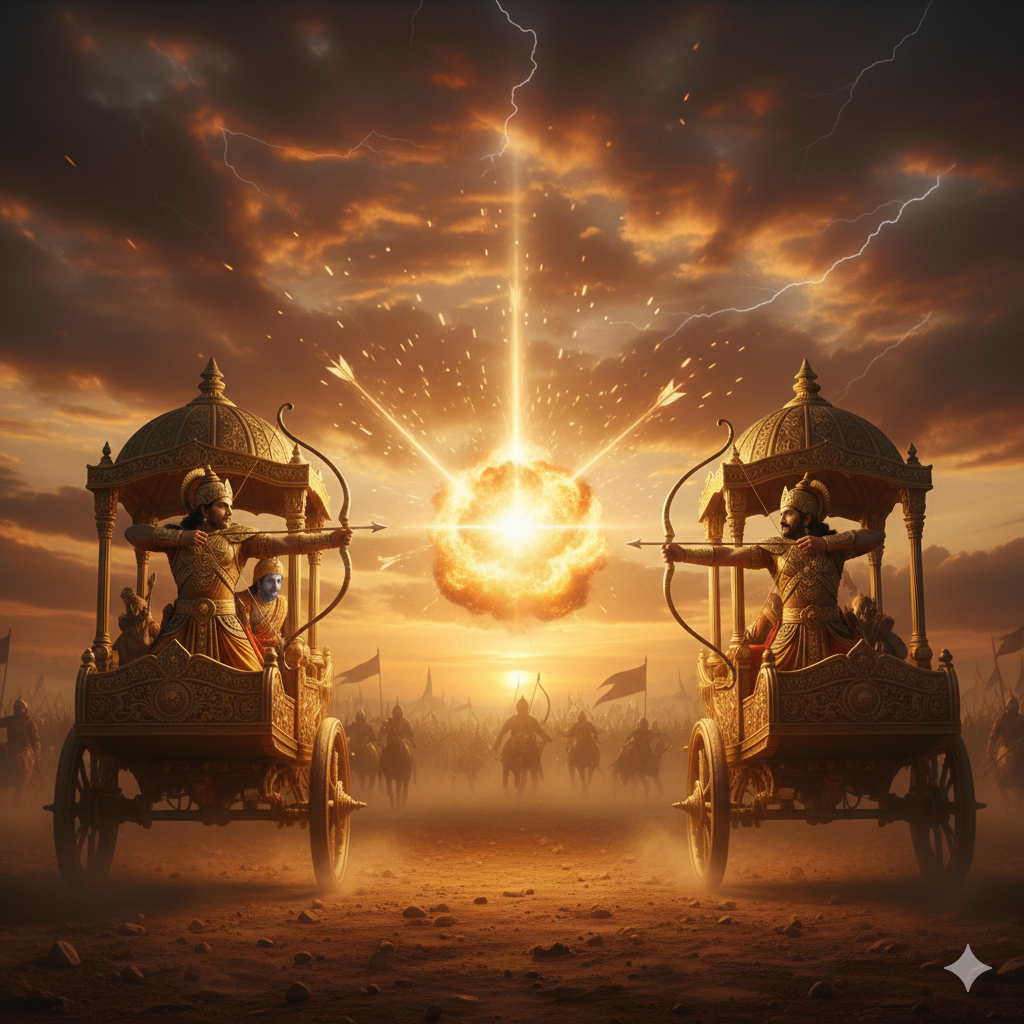
Karna vs Arjuna
The clash of titans! Karna and Arjuna faced off in a duel that shook the earth. Karna possessed the Invincible Bhargavastra, but destiny conspired against him. His chariot wheel sank into the mud, and he forgot his mantras due to a curse. Seizing the moment on Krishna's command, Arjuna released the fatal arrow, ending the life of his unknown brother.
Epic Fact
Karna's chariot wheel got stuck in the mud, leading to his defeat.

Duryodhana’s Defeat
The war culminated in a mace duel between Bhima and Duryodhana. Both were equally matched disciples of Balarama. When Duryodhana proved unbeatable due to his mother's protective gaze over his body, Bhima, signaling a broken rule, struck Duryodhana on the thigh—his only weak spot. The Kuru king fell, ending the great war.
Epic Fact
Duryodhana hid in a lake before the final duel.
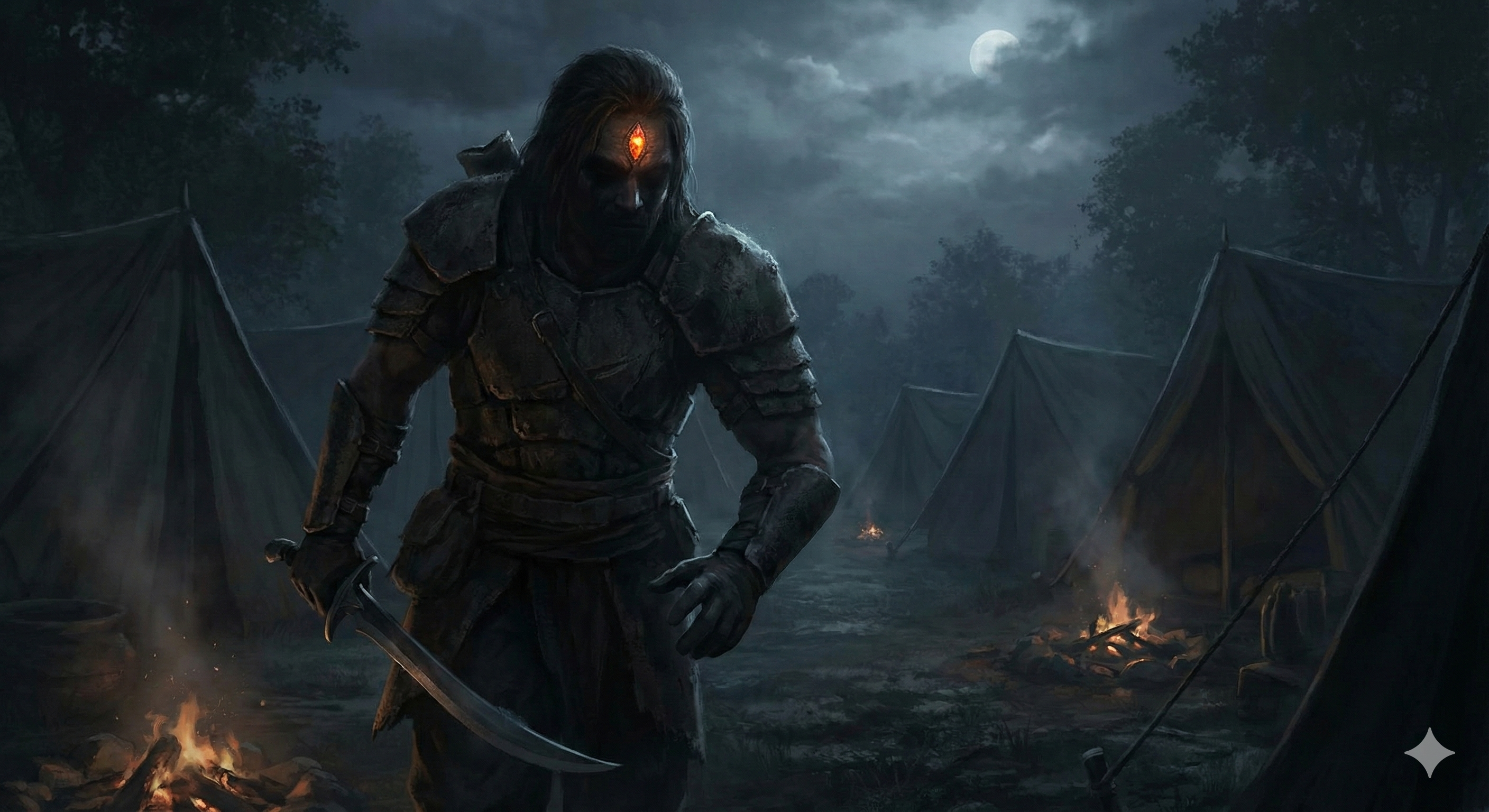
Ashwatthama's Revenge
Seeking revenge, Ashwatthama raided the Pandava camp at night, slaughtering their sons and allies in their sleep. He then released the Brahmastra to kill the unborn Parikshit. Krishna saved the child but cursed Ashwatthama to roam the earth eternally with bleeding wounds, witnessing time pass in agony.
Epic Fact
Ashwatthama is believed to be one of the Chiranjeevis (Immortals) still alive today.
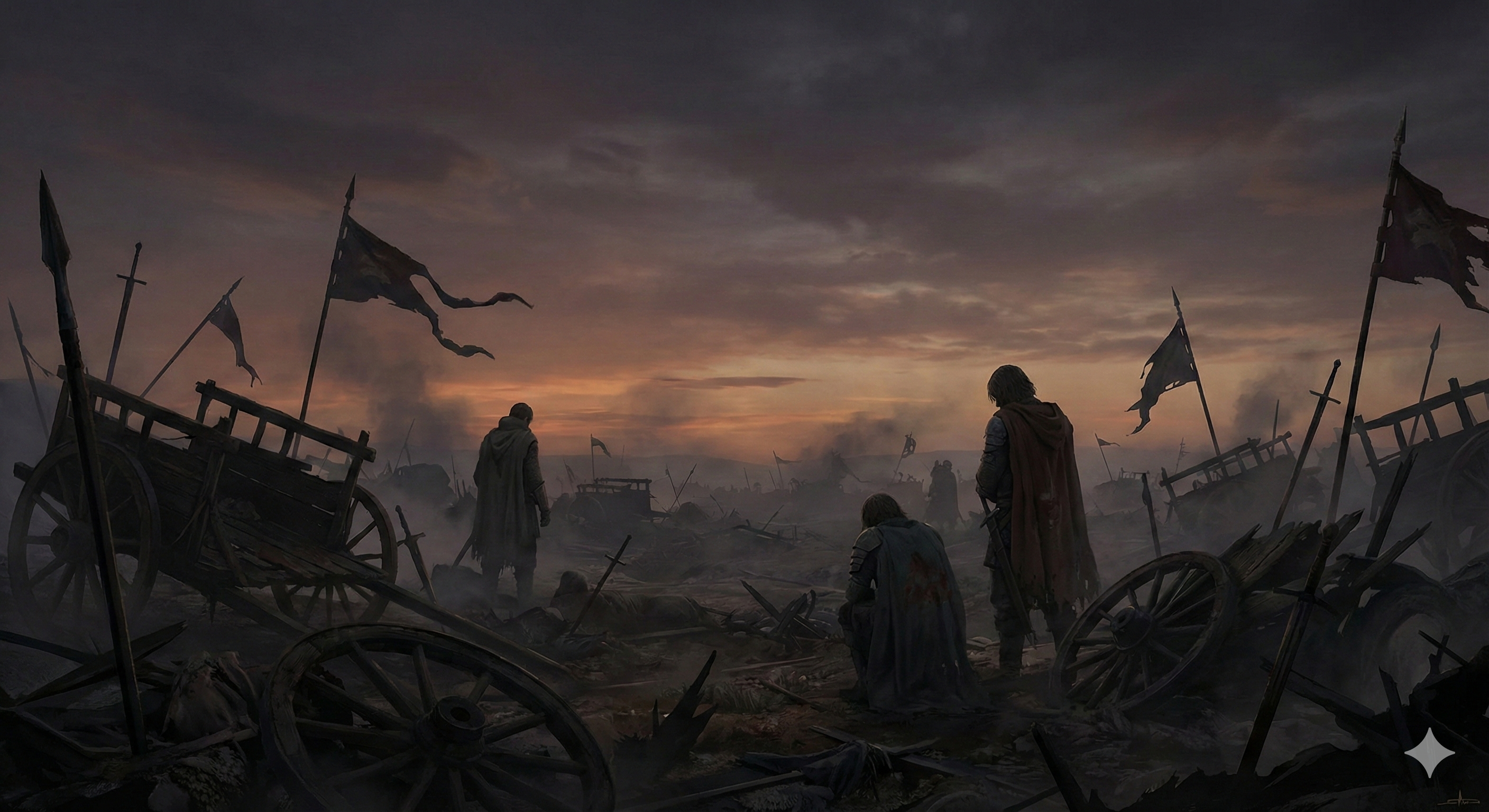
End of War
As the sun set on the 18th day, the battlefield of Kurukshetra lay silent, soaked in blood. Millions had perished, leaving behind widows and emptiness. The victory was hollow, as the Pandavas stood amidst the corpses of their own kin. It was a somber reminder that in war, there are no true winners, only survivors.
Epic Fact
Only a handful of warriors survived from both sides.

Gandhari's Curse
Grieving over her hundred dead sons, Gandhari cursed Krishna. She blamed him for allowing the massacre. She cursed that just as the Kuru lineage ended, Krishna's own Yadava clan would perish by fighting among themselves after 36 years, leaving him to die in solitude.
Epic Fact
Krishna accepted the curse with a smile, knowing it was the law of Karma.
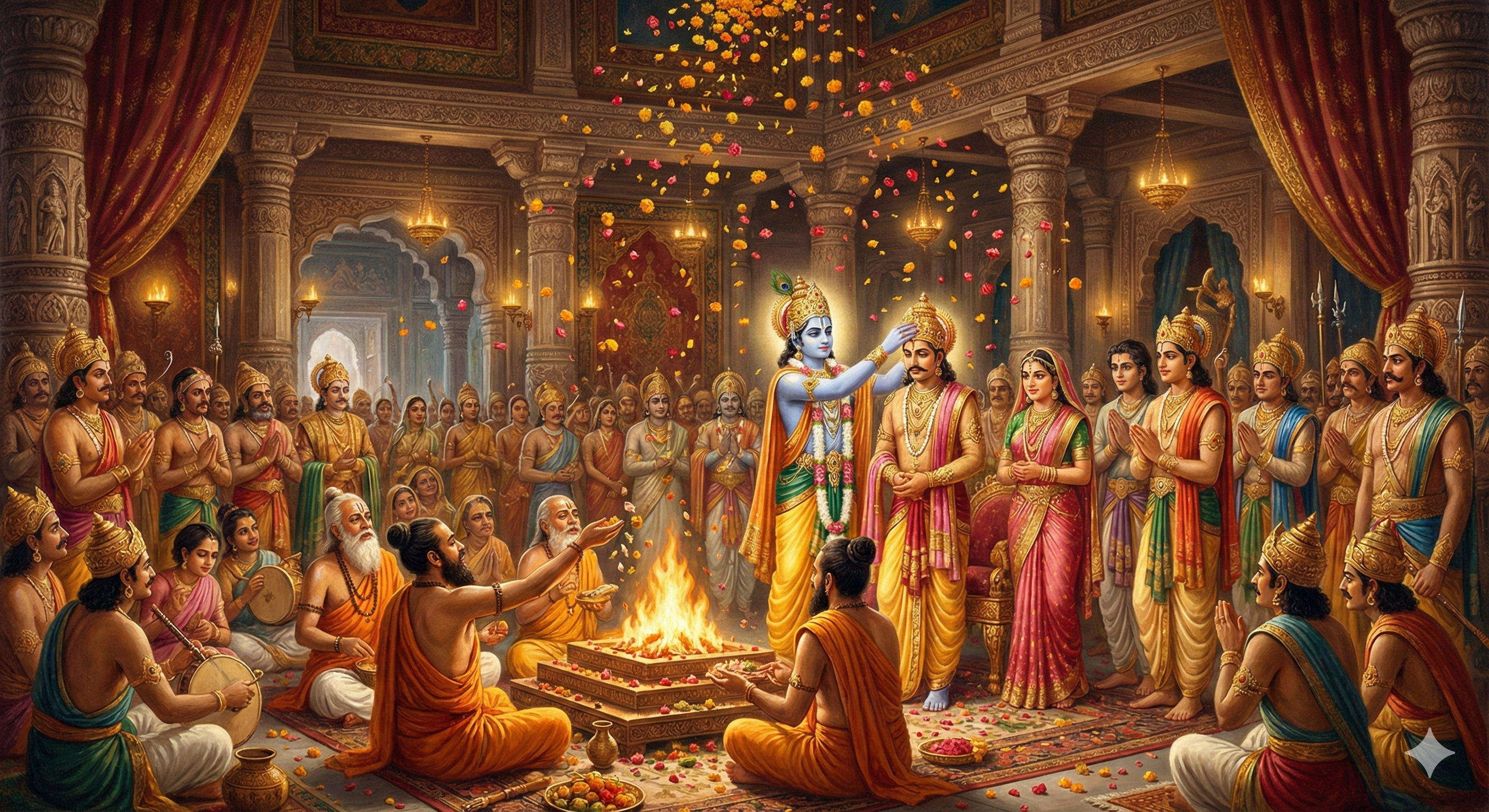
Yudhishthira Becomes King
With the war over, Yudhishthira was crowned the King of Hastinapur. Though heavy with grief, he ruled with absolute justice and Dharma for 36 years. Under his reign, the kingdom prospered, and order was restored, earning him the title of 'Dharmaraj', the King of Righteousness.
Epic Fact
He became known as Dharmaraj (King of Righteousness).
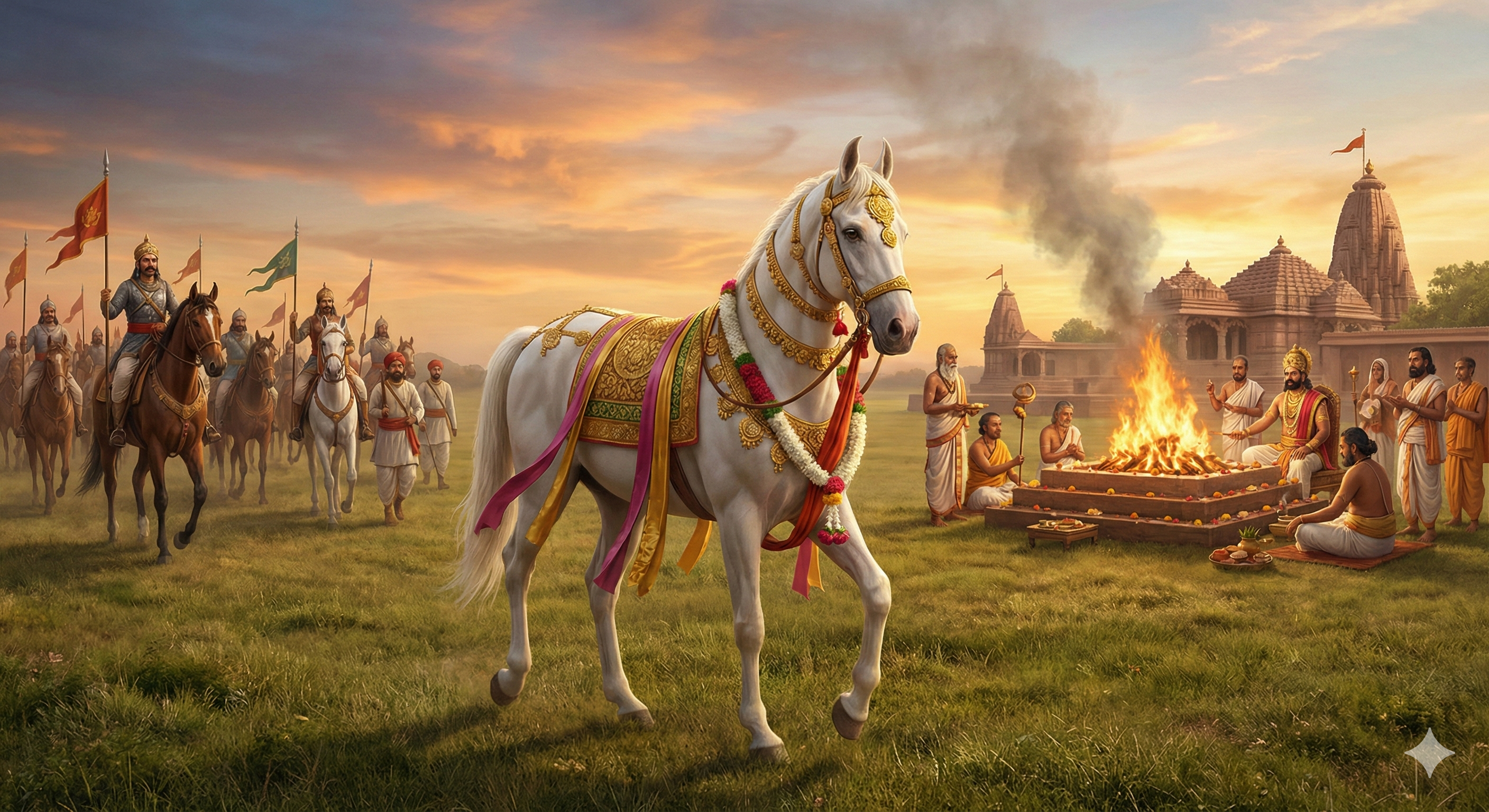
Ashwamedha Yagna
To cleanse the sins of the war and establish universal peace, Yudhishthira performed the grand Ashwamedha Yagna. A white horse was released to roam freely across lands, followed by the Pandava army led by Arjuna. Kings across Bharatvarsha accepted Yudhishthira's sovereignty, uniting the land under one Dharma.
Epic Fact
The Yagna established the sovereignty of the Pandavas over the land.
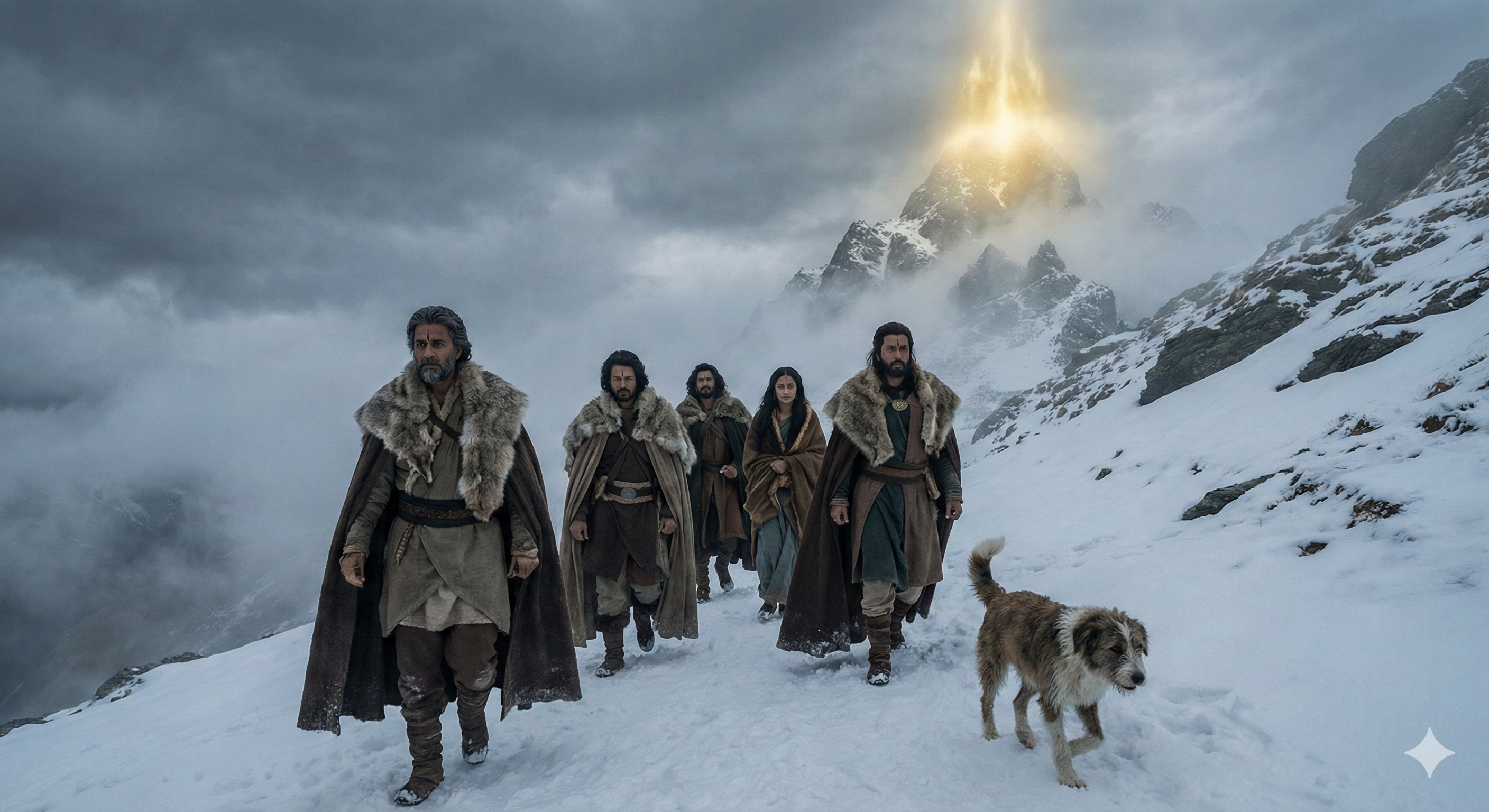
Pandavas’ Final Journey
After Krishna left his mortal body, the Pandavas renounced their kingdom and began their final journey towards the Himalayas (Mahaprasthan). One by one, Draupadi and the four brothers fell, leaving only Yudhishthira. Accompanied by a dog (Dharma), he alone reached the gates of Heaven in his mortal body, marking the end of an era.
Epic Fact
A dog accompanied Yudhishthira to the gates of heaven, who was actually Lord Dharma.
"यदा यदा हि धर्मस्य..."
Whenever righteousness declines...